Case study — Real Estate · SaaS
Prophero Real Estate CRM
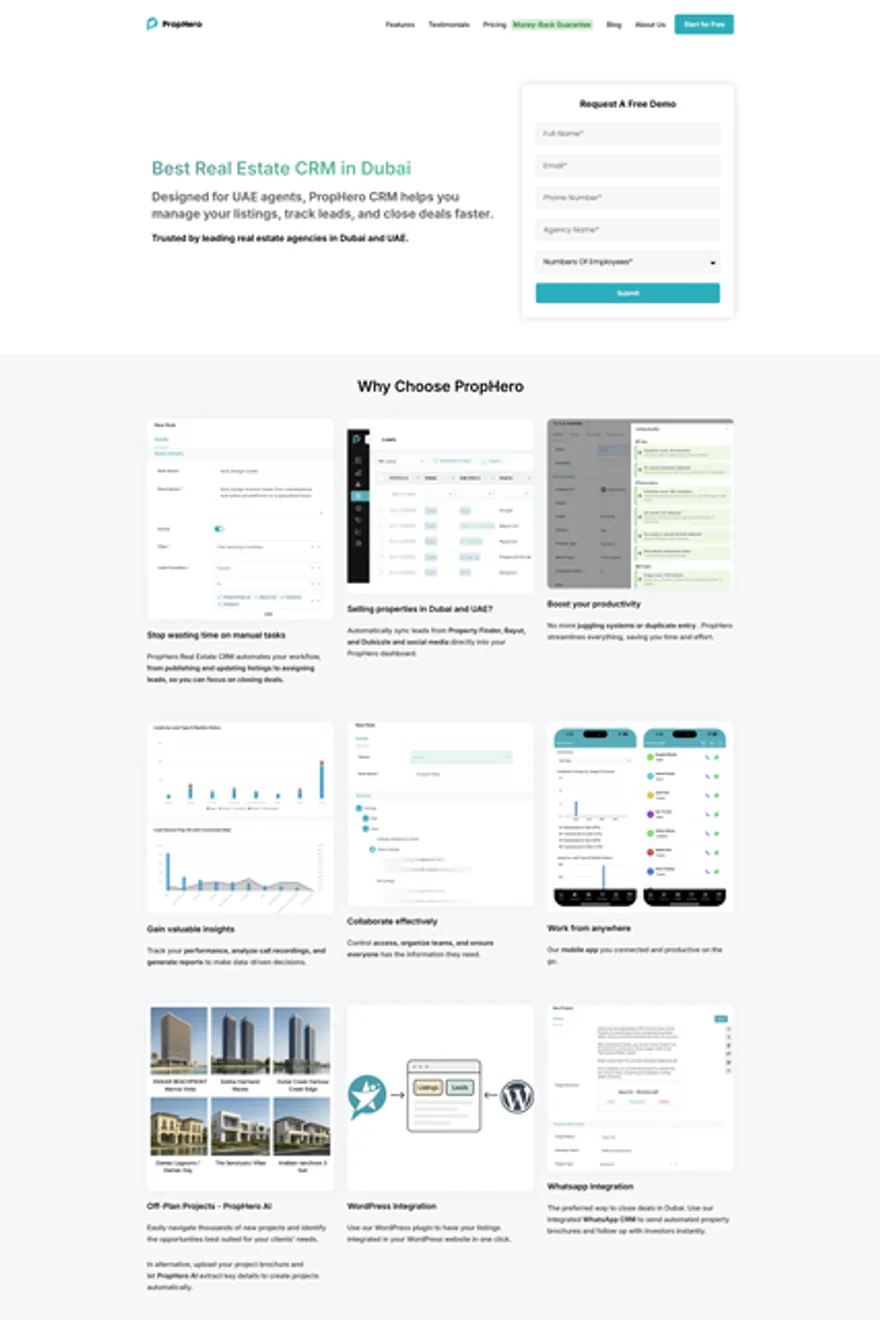
Prophero is a real estate CRM. My job was the website: take a complex software product and present it clearly enough that a busy agent or brokerage owner understands what it does and why to trust it. This case study covers how I structured, designed, and built that site with SEO and performance engineered in from the start.
- Role
- Web Development
- Services
- Web Application UI · Website Development
- Stack
- WordPress · Custom Code · JavaScript
Live build — hover to pan
01
The Challenge
Software websites usually fail in one of two ways. They drown the visitor in feature lists, or they hide the product behind vague marketing language. A real estate CRM is a genuinely complex product — contact management, pipelines, follow-up workflows — and its buyers are agents and brokerage owners, not software people.
The challenge was translation. The site had to explain what Prophero does in plain terms, make a screenshot-heavy product look credible rather than cluttered, and do it fast, because a visitor comparing CRM options gives each site seconds, not minutes.
02
The Strategy
I started with structure, not visuals. Before any page was designed, I mapped what a prospective buyer needs to know and in what order: the problem the CRM solves, how it works, who it is for, and what to do next. Each page got one job.
Plain language was a deliberate decision. Feature names mean nothing to someone who has never used the product, so every capability is framed as the task it replaces. That same discipline shaped the SEO plan — pages were organized around the questions real estate professionals actually ask when they look for software, which is groundwork you cannot bolt on later.
03
The Design
Presenting software is a framing problem. Product screenshots carry the credibility, so the design gives them room: clean sections, generous spacing, and short captions that tell the visitor what they are looking at. Nothing competes with the product for attention.
The typography and layout follow a strict hierarchy — one idea per section, a clear heading, two or three supporting sentences, then evidence. That restraint is what makes a complex product feel simple. When every element shouts, nothing reads.
04
The Development
I built the site the way I build every product marketing site: WordPress with a controlled, minimal setup. That means reusable templates instead of one-off pages, a short plugin list, and semantic HTML underneath the visual layer, so the markup means something to browsers and crawlers alike.
Deployment followed my standard VPS process — SSL/TLS, server-level caching, automated backups, and security hardening including a web application firewall. A product site is a business asset. It should be as maintainable and as protected as the product it sells.
05
The SEO
SEO was engineered in during the build, not added after. Every page shipped with purposeful metadata, a logical heading structure, clean URLs, and internal links that mirror how a buyer moves from problem to product. Schema markup describes the site's content to search engines in their own vocabulary.
I also structured the content for how search is changing. Answer-ready sections — direct questions, direct answers — give AI-driven search results something they can cite accurately. For a software product, being described correctly in an AI overview matters as much as ranking for a keyword.
06
The Performance
A CRM's website has to feel as fast as the software claims to be. I treated Core Web Vitals as build requirements: images sized and compressed before upload, scripts limited to what each page actually uses, and layouts built so nothing shifts while loading.
Server configuration did the rest — caching at the VPS level, TLS everywhere, and post-launch monitoring through Google Search Console. Speed is not a launch-day number. It is a property you maintain.
07
The Result
Prophero got what a software company actually needs from its website: a clear, credible presentation of a complex product, built on a foundation the team can maintain. The pages explain the CRM in the buyer's language, the markup and schema make it legible to search engines and AI answers, and the infrastructure behind it is secured and backed up.
If you are evaluating a developer for a product site of your own, check exactly these layers: does the page structure match how your buyers think, does the site hold up under a speed test, and is there a real deployment process behind it. That is the standard this build was held to.
Services behind this project
Next Step
Have an idea for a website?
Let's turn it into something people remember — and search engines can understand.
Usually replies within a day · Lahore, Pakistan · working worldwide
View my work